
Five Chemicals Controlling Termites
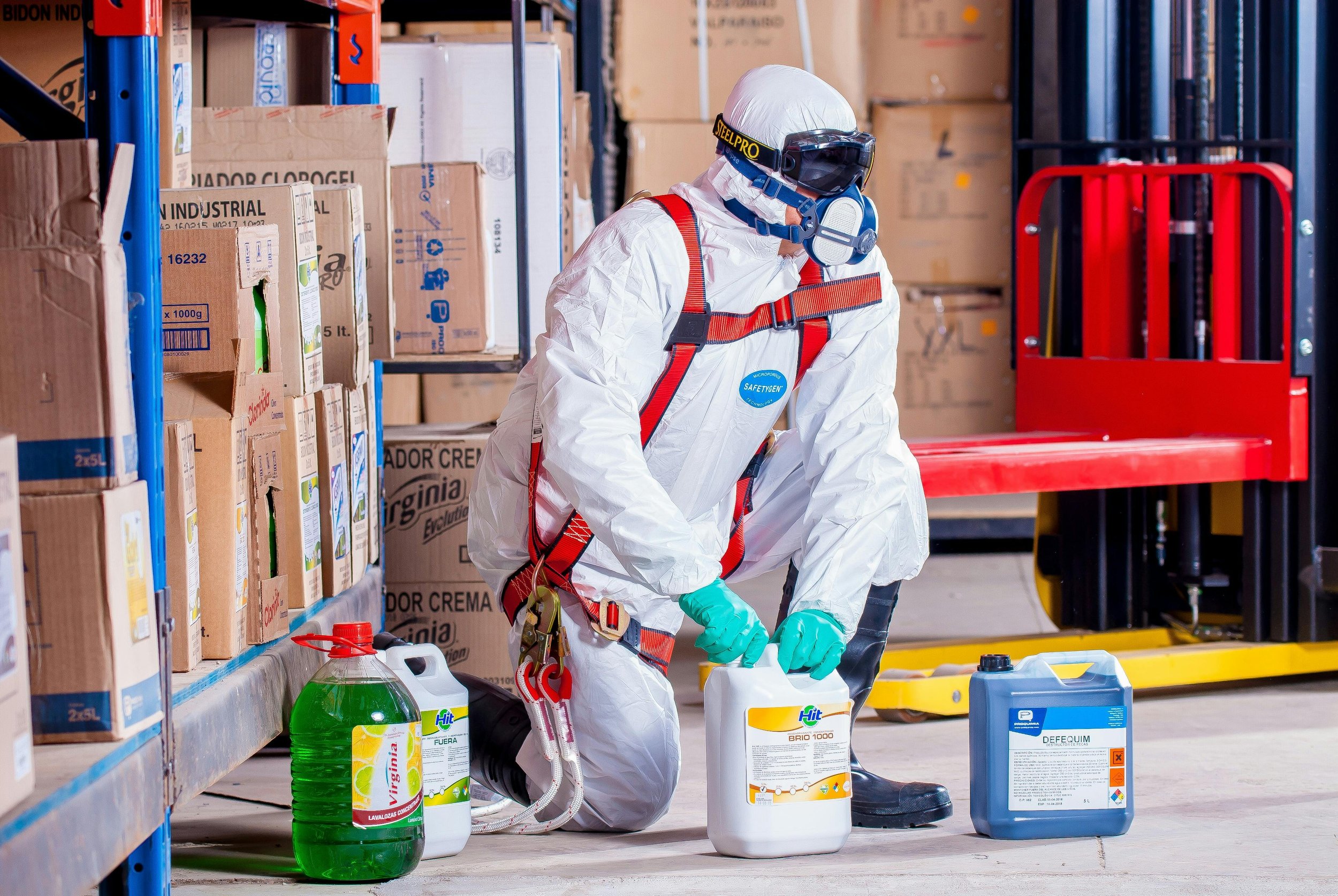
Arizona homeowners lose billions each year to termite damage—often before realizing there’s a problem. Termites feed on more than wood; they’ll also destroy paper, insulation, and even pool equipment. Since these insects never sleep, they can silently eat away at your home 24/7.
If you notice mud tubes, wood damage, or even one flying termite indoors, act fast. A nearby colony could already be growing. Call (602) 833-0819 or fill out our online form to request professional termite inspection and treatment from Varsity Termite and Pest Control. Protect your home before the damage spreads.
Why DIY Termite Treatments Are Not Enough
You can hardly do a termite control on your own, ridding a home of these insects requires special skills and equipment and you should contact an expert. Knowledge of construction could help identify what the critical areas where termites are likely to enter. Termites usually live in places where they can hide and are hard to access. To eliminate them you must be in contact with chemicals, and if you do not know how to use them or do not have the necessary accessories, you could be at risk. All pesticides can be toxic to humans if sufficient amounts are absorbed through the skin, inhaled or swallowed, and some can also be moderately irritating to the skin and eyes.
Understanding Termite Threats: Why These Chemicals Matter
After a termite inspection, there are two general categories of termite treatment: liquids and baits, being the soil-applied liquid termicides the most effective and used in Arizona. It has as a purpose provide a long-lasting chemical barrier that excludes termites in the ground from entering buildings. In most cases, termites in the structure die off as well, since they cannot return to the soil. The chemicals in this termicide usually contain arsenic trioxide, bifenthin, permethrin, fipronil, and imidacloprid. In this article, we will explain to you about each one and its characteristics.
Five Key Chemicals Used for Termite Control
Arsenic trioxide: Also known as Arsenious Oxide and White Arsenic, is just one of many arsenial compounds used in pest control and other industries. Instead of termite control, this is used in timber preservation, as herbicides, and as a chemotherapy drug too!
This chemical is a heavy, odorless and tasteless white powder, only slightly soluble in water. It is highly toxic to mammals and insects if consumed, and much more toxic when used as a finely ground material rather than the coarser commercial grade. The main risks to users are either from entry via skin wounds or by breathing floating dust. Some users may develop dermatitis if there is frequent skin contamination. Do not use it as a soil treatment.
Bifenthrin: Registered for both pre-construction barrier treatments in new buildings and for perimeter barrier treatments around existing buildings. It is a synthetic pyrethroid pesticide. Currently, there is a choice of three concentrations at which this chemical may be legally applied. These concentrations are 0.1%, 0.05% and 0.25%. Each of these rates provide different lengths of protection, they are as follows – at least 10 years, 10 years and 3 years respectively. Bifenthrin is classified as being of medium to high toxicity to humans.
Permethrin: This is a pyrethroid. Permethrin is a synthetic chemical that remains effective for longer periods of time. It is registered for the control of active termites in trees and tree stumps only, for the purpose of nest destruction. Tend to be used for subterranean termite control in Gilbert, pretreatments, post construction treatments and foam applications. This product is of low to medium toxicity to humans.
Fipronil: Often applied for broad-use insect control. Fipronil is an extremely active insecticide belonging to the phenylpyrazole family. It is used to create a barrier around existing buildings only. Termites are attracted to the chemical where they die, partly from the effect of the chemical and partly from infection with fungi and other soil microorganisms. Fipronil is of low to medium toxicity to humans.
Imidacloprid: A systemic insecticide which acts on the central nervous system of insects and belongs to a class of chemicals called the neonicotinoids. Because imidacloprid binds much more strongly to insect neuron receptors than to mammals, this insecticide is more toxic to insect. It is of low to medium toxicity to humans.
Safety Precautions When Using Termiticides
It’s important to remember that while chemicals can be effective against termites, they can also be dangerous if mishandled. Using termiticides without proper safety precautions can lead to harmful exposure for you, your family, and even your pets. Always wear personal protective equipment such as a respirator, gloves, long-sleeved protective clothing, and safety goggles before mixing or applying any solution. Additionally, keep children and pets away from the treatment area until the product has fully dried and the space has been properly ventilated. Because misapplication can also reduce effectiveness, termite control is usually best left in the hands of professionals with training and specialized equipment.
Your Partner in Long-Term Termite Defense
Understanding how chemicals work against termites is one step, but protecting your home requires professional care. At Varsity Termite and Pest Control, our experts use safe, proven methods to eliminate termites and prevent future infestations. If you suspect termite activity, don’t wait. Contact Varsity today for a professional inspection and treatment plan tailored to your home.
